
Environmental Management
This page describes Toyota Industries’ environmental policies, targets, and management systems.
Environmental Policy
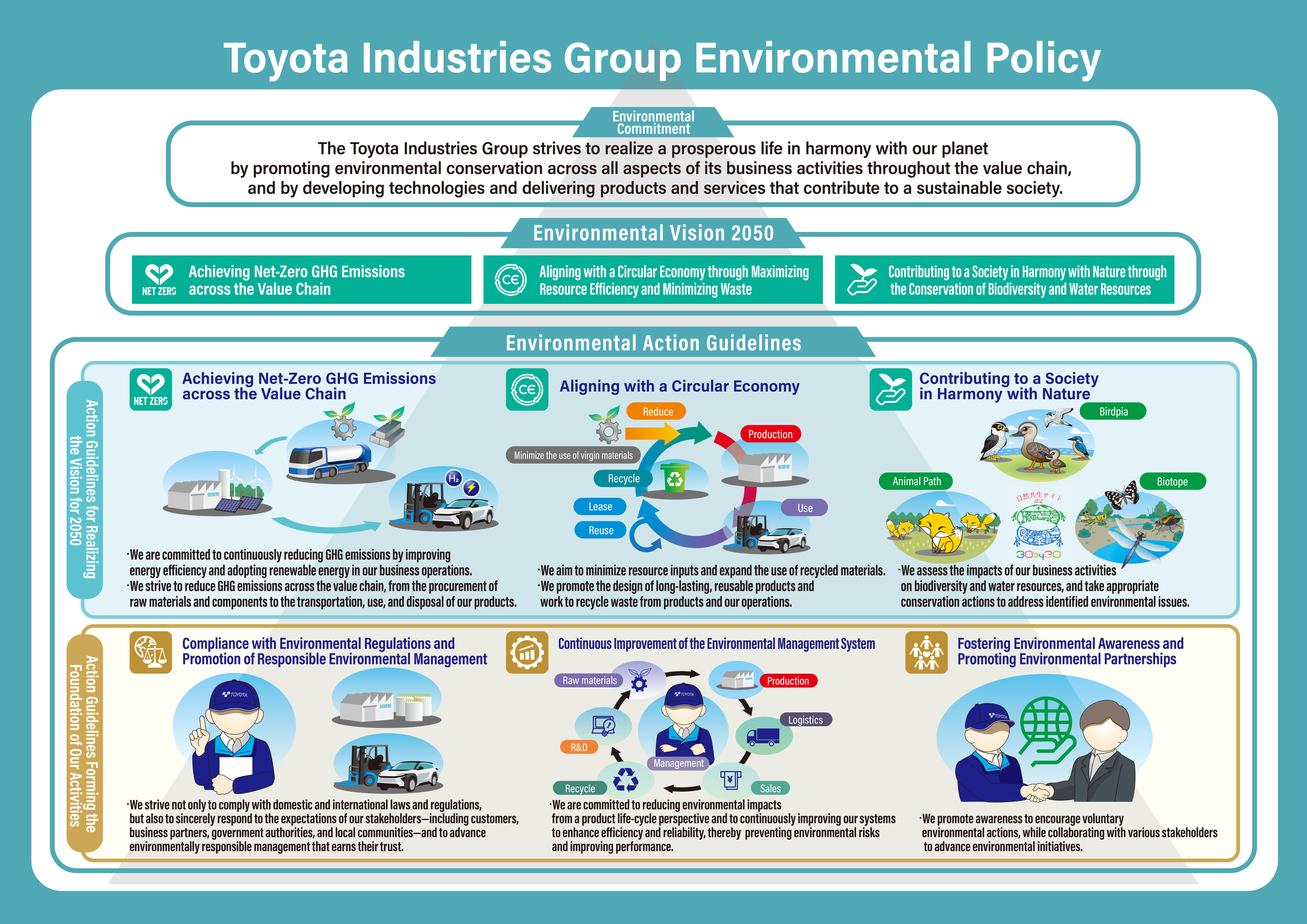
Environmental Commitment
The Toyota Industries Group strives to realize a prosperous life in harmony with our planet by promoting environmental conservation across all aspects of its business activities throughout the value chain, and by developing technologies and delivering products and services that contribute to a sustainable society.
Environmental Vision 2050
・Achieving Net-Zero GHG Emissions across the Value Chain
・Aligning with a Circular Economy through Maximizing Resource Efficiency and Minimizing Waste
・Contributing to a Society in Harmony with Nature through the Conservation of Biodiversity and Water Resources
Environmental Action Guidelines
■ Achieving Net-Zero GHG Emissions across the Value Chain
✓We are committed to continuously reducing GHG emissions by improving energy efficiency and adopting renewable energy in our business operations.
✓We strive to reduce GHG emissions across the value chain, from the procurement of raw materials and components to the transportation, use, and disposal of our products.
■ Aligning with a Circular Economy
✓We aim to minimize resource inputs and expand the use of recycled materials.
✓We promote the design of long-lasting, reusable products and work to recycle waste from products and our operations.
■ Contributing to a Society in Harmony with Nature
✓We assess the impacts of our business activities on biodiversity and water resources, and take appropriate conservation actions to address identified environmental issues.
■ Compliance with Environmental Regulations and Promotion of Responsible Environmental Management
✓We strive not only to comply with domestic and international laws and regulations, but also to sincerely respond to the expectations of our stakeholders—including customers, business partners, government authorities, and local communities—and to advance environmentally responsible management that earns their trust.
■ Continuous Improvement of the Environmental Management System
✓We are committed to reducing environmental impacts from a product life‑cycle perspective and to continuously improving our systems to enhance efficiency and reliability, thereby preventing environmental risks and improving performance.
■ Fostering Environmental Awareness and Promoting Environmental Partnerships
✓We promote awareness to encourage voluntary environmental actions, while collaborating with various stakeholders to advance environmental initiatives.
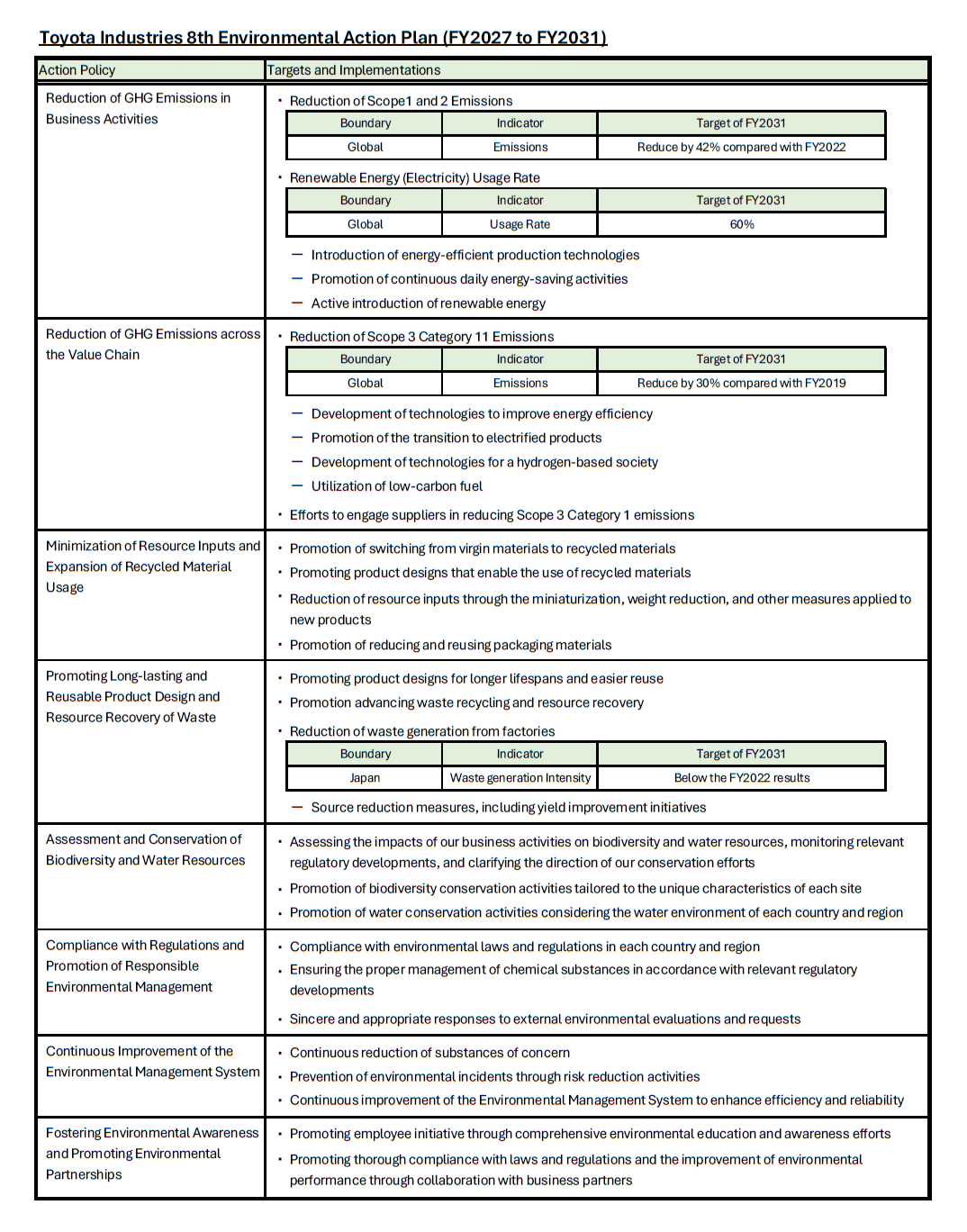
Eighth Environmental Action Plan
Under our Environmental Policy, we have established specific targets for each priority area.
Over the five-year period from fiscal 2027 to fiscal 2031, we will work together as a unified group to systematically advance these initiatives and contribute to the realization of a sustainable society.
 Eighth Environmental Action Plan [107.5KB / 1page]
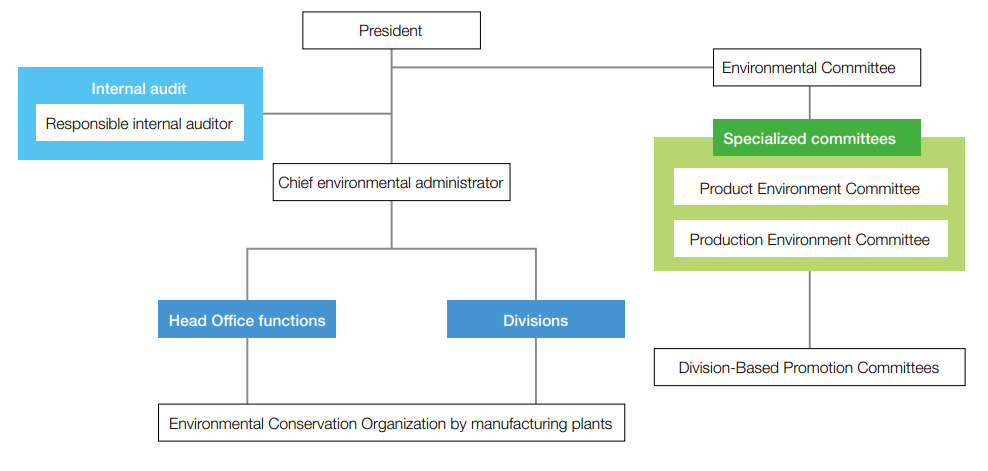
Promotional Structure
Toyota Industries positions environmental initiatives as one of its most crucial management issues. In order to promptly reflect management decisions in business operations, Toyota industries established and operates a company-wide integrated environmental management system (EMS) with the president at the top.
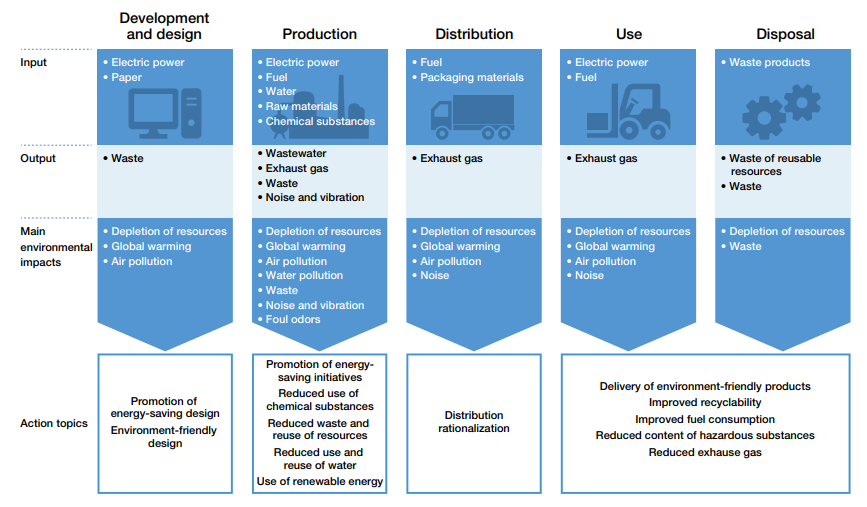
Environmental impact of business activities
We have been striving to grasp the overall picture of the use of natural resources and energy, and the consequential environmental impact over the entire life cycle of the product from the planning, development and design of a new product to its disposal, with the aim of promoting efficient activities and reducing environmental impact. The input includes sources of energy such as power, water, paper used in offices, raw materials used for manufacturing the product, various kinds of chemical substances used in the production process, and fuel for transport vehicles used in the distribution stage. The effect of their consumption is the depletion of natural resources. The output includes wastewater, exhaust gas and other wastes generated in the manufacturing stages, and carbon dioxide produced by the consumption of fuel and energy, which have various environmental impacts. To reduce these environmental impacts, we have been establishing daily controls, setting goals and promoting environmental activities.
ISO 14001 Certification and Internal Audit
ISO 14001 Certification Status
Toyota Industries and it's consolidated subsidiaries have made considerable progress in acquiring ISO 14001 certification. Currently, 37 of a total of 41 Toyota Industries Corporation and its production subsidiaries subject to environmental management have obtained certification. (90.2%)
The current status of certification is shown below.
 ISO14001 Certification Status List [196.6KB / 1page]
Internal Environmental Audits
We conduct independent, high-quality internal audits based on the Environmental Management System.We have established an internal audit structure with the General Manager of the Corporate Environmental Management Department in charge of internal audits, a team leader who is responsible for internal audit practices, and auditors selected from each business division.The internal auditor detects underlying problems in each organization, and each of these organizations implements corrective measures to address these problems.
| Audit Organization | Role |
|---|---|
| Responsible internal auditor | Overall responsibility for internal environmental audits |
| Team leader | Responsible for implementing company-wide internal environmental audits |
| Sub leader | Responsible for implementing business division internal environmental audits |
| Head supervisor and Auditors | Responsible for implementing department internal environmental audits |
Education and Raising Awareness
Toyota Industries organizes the environmental knowledge and abilities needed for each job category and title and develops environmental education programs based on the results. Specifically, we conduct rank-based education, provide introductions to environmental management and environmental audits, and conduct education on environmental responses for products and other topics. In addition to such environmental education, we invite outside lecturers to teach courses on the environment, run special features about the environment in internal newsletters, and make other efforts to raise employee awareness regarding the environment.